Interracial datingIn this age of globalized dating, interracial relationships have become increasingly common. According to recent research, over 15% of newlywed couples come from different racial backgrounds, and pairs like Theresa and Ivan's Jamaican-Mexican combination represent a particularly unique landscape. Their story not only proves that true love knows no borders but also demonstrates how cultural differences can become catalysts rather than obstacles in relationships.

A Digital Encounter - From Suspicious Bot to Real-Life Lovers
Picture this scene: Ivan, an AI expert from Chiapas, Mexico, was browsing what he later affectionately called "that questionable dating platform" – InternationalCupid.com. With a scientist's precision, he approached online dating by analyzing patterns and probabilities. When Theresa's profile popped up—a vibrant Jamaican educator with a smile that seemed to transcend the platform's typically grainy photos—he decided to take a chance.
What happened next nearly ended everything before it began.
"Theresa responded faster than any algorithm I'd ever designed," Ivan recalls with a laugh. "In my world of coding and data analysis, response times like that usually indicate automation. I was genuinely concerned I was chatting with an advanced Caribbean chatbot!"
Theresa, meanwhile, was operating on "Jamaican time"—which, contrary to popular belief, when it comes to digital communication means immediate and direct. "Why wait?" she shrugs. "If I'm interested, I respond. If not, I don't. It's that simple."
This first cultural misunderstanding nearly cost Ivan what would become the love of his life. "I actually asked her to prove she was human," he admits, cringing at the memory. "I suggested we move to a different messaging platform, thinking a bot wouldn't be able to make that jump."
Theresa's response was pure Jamaican gold: "I told him if he wanted proof I was real, he should stop hiding behind screens and meet me properly." This bold challenge led to their first date invitation—a wedding in Mexico City two months later, which brings us to...
The First Date Disaster - 45 Minutes That Nearly Ended Everything
The scene: A charming café in Mexico City's Roma neighborhood. Theresa arrived precisely on time, dressed in what she describes as "proper Jamaican wedding guest attire"—vibrant colors, elegant yet bold, turning heads in the best way possible. Ivan, meanwhile, was stuck in what Mexicans call "tráfico pesado" and Jamaicans might call "pure traffic madness."
"Forty-five minutes late!" Theresa exclaims, the memory still fresh years later. "In Jamaica, we have a concept called 'soon come'—but for a first date? At a wedding? I was ready to write this man off completely."
When Ivan finally arrived, flustered and apologetic, he found a Jamaican queen tapping her fingers with an expression that could curdle milk. "I knew I had approximately thirty seconds to save this situation," he remembers. "My Mexican upbringing taught me the art of the elaborate apology, but I could sense that wouldn't work here."
What happened next was their first successful intercultural negotiation. Instead of the flowery Spanish apology he'd prepared, Ivan went straight to the point: "I'm late, it's my fault, there's no excuse, and I understand if you want to leave. But if you'll give me one hour, I promise to make it up to you."
Theresa, appreciating the unexpected directness, decided to stay. "That was my first lesson in Mexican culture," she says. "The traffic here is genuinely apocalyptic. But more importantly, I saw that he could adapt his communication style when it mattered."
The wedding itself became a microcosm of their future relationship—Theresa's Jamaican directness charmed Ivan's friends, while Ivan's Mexican warmth made Theresa feel included despite language barriers. They danced to both cumbia and dancehall, a perfect preview of the cultural fusion to come.
Communication Clash - When Jamaican Directness Meets Mexican Subtlety
If their love story were a rom-com, this would be the montage where cultural misunderstandings create both conflict and comedy gold. Early in their relationship, Theresa would ask Ivan what he wanted for dinner. His typical Mexican response: "Oh, whatever you prefer, mi amor. Maybe something light? But if you're hungry, we could get something more substantial. Or we could just see what we feel like later?"
Theresa's Jamaican brain would short-circuit. "Just tell me what you want to eat! Why are we having a philosophical discussion about dinner possibilities?"
Ivan explains the cultural background: "In Mexican communication, we often approach topics indirectly to maintain harmony. It's not about being evasive—it's about being considerate of the other person's preferences."
Theresa counters with Jamaican philosophy: "In Jamaica, we believe the truth is the truth. Why use ten words when three will do? Direct communication shows respect for the other person's time and intelligence."
Their breakthrough came during a particularly hilarious misunderstanding about household chores. Ivan had mentioned that the bathroom "could maybe use a cleaning sometime soon, if you have a moment, no rush though." Theresa, taking this as a casual observation, continued with her week. Ivan, meanwhile, was growing increasingly anxious, wondering why his clear (to him) request for immediate bathroom cleaning was being ignored.
"The tension built for three days!" Theresa laughs. "Finally I asked him why he was being so strange about the bathroom. When we untangled what had happened, we both just collapsed laughing."
Their solution? They created what they call "The Cultural Translation Guide"—a playful but practical system where Ivan learned to be more direct about his needs, and Theresa learned to read between the lines of Mexican subtlety.
"Now when Ivan says 'maybe we should think about dinner options,' I know he's actually saying 'I'm starving, let's eat now,'" Theresa explains. "And when I say 'this isn't working for me,' Ivan knows I'm not angry—I'm just being efficiently honest."
Food Diplomacy - How Ackee and Saltfish Won a Mexican Heart
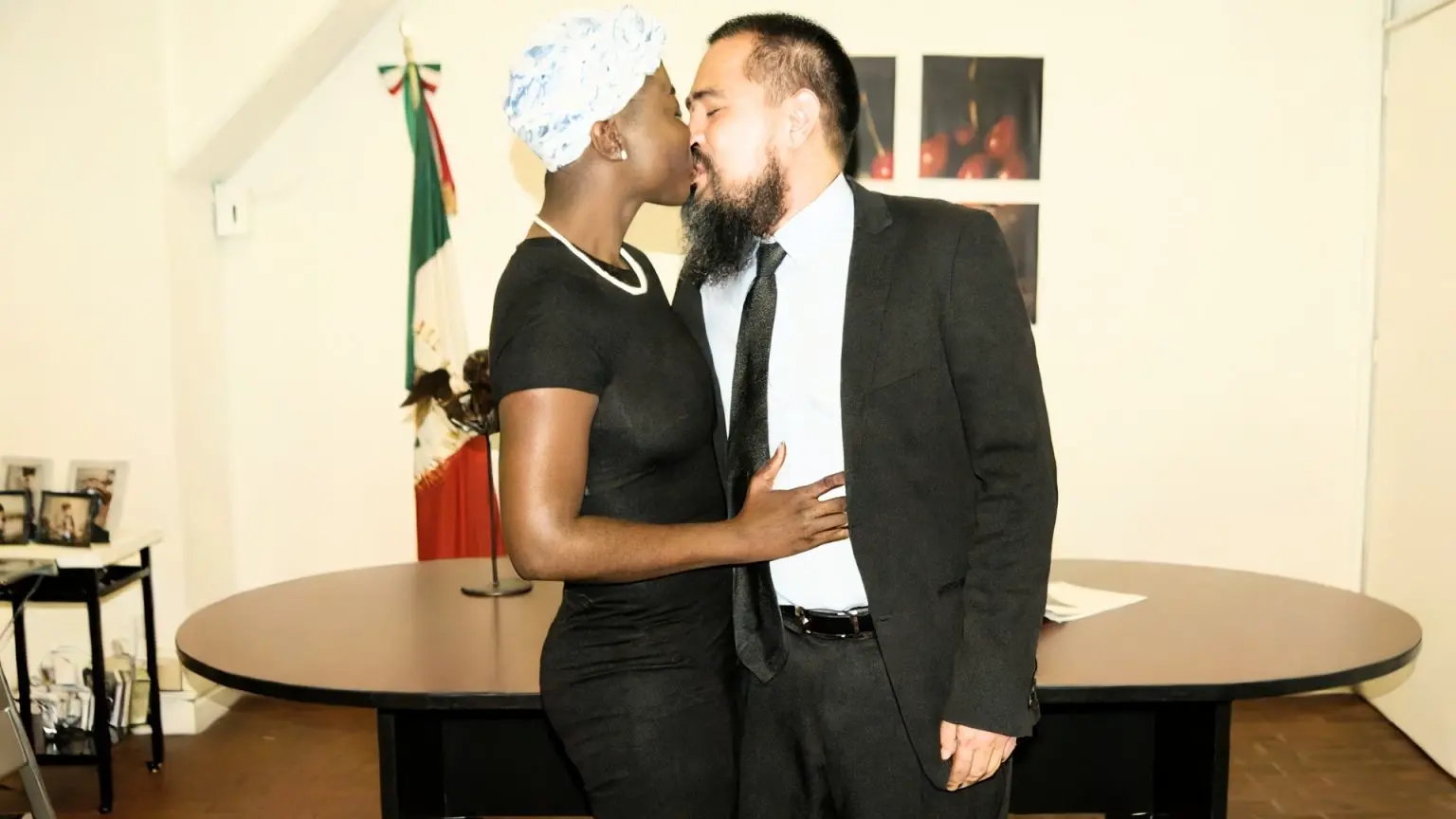
In the world of interracial dating, the kitchen often becomes the most important room in the house. For Theresa and Ivan, food became their love language, their cultural bridge, and the source of their most memorable adventures.
Ivan's initiation into Jamaican cuisine began with what he calls "The Ackee and Saltfish Revelation." "I thought I understood complex flavors from Mexican mole," he says, "but ackee and saltfish? This was a flavor symphony I wasn't prepared for. The texture of ackee like scrambled eggs, but with the dignity of a royal ingredient! The saltfish providing that salty backbone! It was life-changing."
Theresa beams with pride recounting Ivan's conversion. "When a Mexican man, born in the land of complex sauces, tells you your Jamaican cooking is revolutionary? That's when you know you've won." But the culinary adventures weren't one-sided. Theresa's introduction to Mexican cuisine came through what she calls "The Chile Intervention."
"I thought I understood spicy food," Theresa claims. "Jamaican jerk is no joke. But Mexican chiles? They're psychological warfare disguised as food. The first time I bit into what I thought was an innocent-looking pepper, I saw my entire life flash before my eyes."
Ivan laughs, remembering the incident. "I told her it was 'poco picante'—a little spicy. In Mexican cooking terms, that means 'will make a grown man weep.' She handled it like a champion though, once she recovered."
Their kitchen now operates on what they call "Fusion Fridays," where they create dishes that would make traditionalists from both cultures raise their eyebrows. Think jerk chicken tacos, ackee and saltfish quesadillas, and sorrel-infused margaritas.
"The best part of interracial dating is the food experimentation," Ivan says. "We've created dishes that don't exist anywhere else in the world, just in our kitchen. That feels magical."
Family Integration - Bridging the Language Gap with Laughter
Meeting the family is stressful in any relationship, but in intercultural partnerships, it's an Olympic-level event. Theresa's first visit to Ivan's family in Chiapas came with what she calls "the three F's": food, fiestas, and fascinating language barriers.
"Ivan's parents don't speak English, and my Spanish was what I'd call 'tourist level' at best," Theresa recalls. "The first dinner was mostly me smiling, nodding, and saying 'sí' to everything. I later learned I'd agreed that the family dog needed medication and promised to help paint the house."
Ivan's family, however, fell in love with Theresa immediately. "They called her 'la Jamaiquina' and were fascinated by her hair, her style, her everything," he says. "My mother especially loved how Theresa would help in the kitchen without being asked—even when she accidentally used habanero peppers instead of bell peppers in the salad."
The language barrier, rather than being an obstacle, became a source of connection. Theresa taught Ivan's family Jamaican phrases, while they patiently helped her with Spanish. Their linguistic masterpiece is what they call "Spanglish-Patois," a delightful hybrid that includes phrases like "Wah gwaan, cómo estás?" and "No problem, todo bien."
"The kids in the neighborhood think we've invented a new language," Theresa laughs. "And maybe we have. It works for us."
When Ivan met Theresa's family in Jamaica, the cultural exchange continued. "Jamaican families are... intense in the best way," Ivan says. "The first time her uncle grilled me about my intentions, I felt like I was in a job interview for the most important position of my life. But once I passed the test, I was family."
Theresa's grandmother particularly adores Ivan. "She calls him 'the Mexican who eats like a Jamaican,' which is the highest compliment she can give."
Holiday Hijinks - Navigating Cultural Traditions
If daily life in an interracial relationship requires adaptation, holidays demand full-scale cultural diplomacy. Their first major test came with Mexico's Day of the Dead.
"As a Jamaican, we don't play with death," Theresa explains. "We respect our ancestors, but we don't build altars for them or have picnics in cemeteries. My initial reaction was 'unno mad o wah?'—which roughly translates to 'are you all crazy?'"
Ivan approached the tradition with patience and explanation. "I told her it's not about morbidity—it's about celebration, memory, and keeping our loved ones present in our lives. When she finally participated, she understood the beauty behind it."
Theresa now looks forward to creating the ofrenda each year. "I include my Jamaican grandparents alongside Ivan's Mexican abuelitos. We have rum and tequila, jerk chicken and tamales. It's become our way of honoring both sides of our family."
Christmas, however, presented the opposite challenge. "In Mexico, Christmas Eve is the big celebration," Ivan explains. "In Jamaica, it's Christmas Day. Our first Christmas together, we were out of sync the entire time!"
Their solution? "We now celebrate both," Theresa says. "Nochebuena with his family, Christmas morning with calls to Jamaica, and Christmas dinner with our fusion feast. It's exhausting but wonderful."
Parenting Across Cultures - Raising a Third-Culture Child
The arrival of their daughter, Sofia, added a new dimension to their intercultural journey. "Suddenly, we weren't just negotiating our own cultural differences," Ivan says. "We were responsible for creating a cultural identity for another human being."
They made conscious choices about language—Spanish from Ivan, English from Theresa, with Jamaican Patois and Mexican slang mixed in for good measure. "Sofia's first words included 'mama,' 'papá,' 'waah gwaan,' and 'órale,'" Theresa laughs. "She's literally bilingual and bi-cultural from birth."
Their parenting styles reflect their cultural backgrounds too. "I'm more relaxed about certain things," Ivan admits. "Theresa is more direct with discipline. We've found a middle ground that takes the best from both approaches."
Sofia, now a toddler, is already showing signs of what sociologists call "third-culture kid" traits. "She switches between languages depending on who she's talking to," Theresa says proudly. "And she knows that Friday is jerk chicken day and Tuesday is taco day. She's our little cultural ambassador."
The Wisdom Gained - Advice for Other Interracial Couples
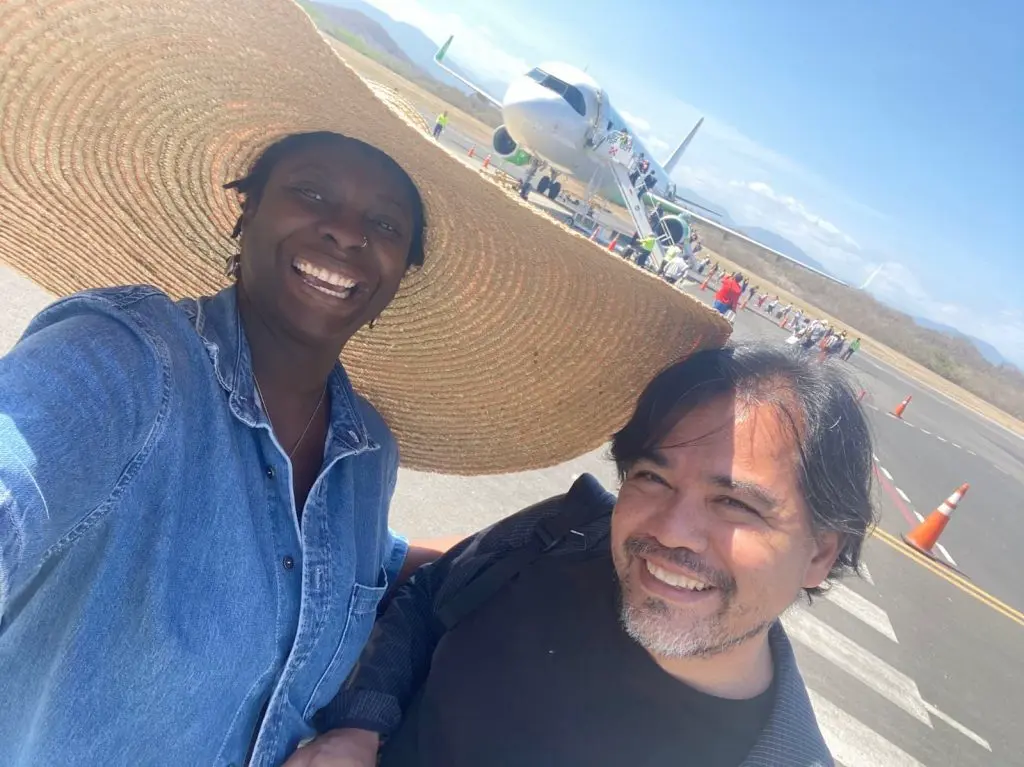
After years of navigating cultural differences, Theresa and Ivan have become accidental experts in making interracial dating work. Their advice is both practical and profound:
1. Embrace the Learning Curve "Approach cultural differences with curiosity, not judgment," Ivan advises. "When Theresa did something that seemed strange to me, I learned to ask 'help me understand the thinking behind this' rather than assuming it was wrong."
2. Create Your Own Traditions "Don't feel pressured to choose between cultures," Theresa adds. "We have Jamaican Christmas breakfast and Mexican Christmas Eve dinner. We celebrate both Jamaican Independence Day and Mexican Independence Day. More holidays mean more joy!"
3. Laughter is Your Best Tool "You have to be able to laugh at yourselves," they both emphasize. "When I accidentally used curry powder instead of chili powder in the tacos, we could have gotten upset. Instead, we ordered pizza and added it to our growing list of 'fusion failures' that became funny stories."
4. Build Your Support System "Find other intercultural couples," Theresa recommends. "They get it in ways that even well-meaning friends from your own culture can't. We have a group called 'United Nations of Love' that meets monthly. The stories we share are both hilarious and healing."
5. Patience, Patience, Patience "Nothing about intercultural relationships is instant," Ivan says. "Understanding develops slowly. You have to be patient with your partner, with their family, and especially with yourself."
Love in Translation
Theresa and Ivan's story is more than just a successful interracial dating example—it's a blueprint for building bridges in an increasingly connected world. They've proven that cultural differences don't have to be divisions; they can be the very things that make a relationship richer, more interesting, and more resilient.
"Our love speaks two languages, cooks two cuisines, and celebrates in multiple ways," Theresa reflects. "It's not always easy, but it's always worth it."
Ivan adds the perfect summary: "In the end, love doesn't need translation. It just needs willingness. Willingness to understand, to adapt, and to embrace the beautiful complexity of another human being's world."
As they continue to write their story—raising their bilingual daughter, creating new traditions, and occasionally still confusing each other with cultural nuances—Theresa and Ivan stand as living proof that the most interesting love stories are the ones that dare to cross borders, blend cultures, and create something entirely new in the process.